

Sustainability

Producing safety shoes responsibly – what does it take?

Improving the environmental and social impact of safety shoes requires looking at the entire supply chain. From the procurement of materials to production and delivery to specialist retailers and consumers, we take environmental and social criteria into account.

Reducing environmental impacts step by step

“Environmental and social considerations have long played an important role in our family business. We have been systematically working to reduce greenhouse gas emissions at our company site for many years. At the same time, we aim to use resources efficiently and take a close look at substances of concern, materials and working conditions throughout our supply chain.

For us, this is an ongoing process. We regularly review where improvements can be made and continue to work on reducing environmental impacts and strengthening social standards throughout our supply chain.” Markus Nelke, Managing Director of L. Priebs GmbH & Co. KG

“For us, producing safety footwear is about more than the finished product. We also look at where materials come from, how our shoes are produced and the working conditions within our supply chain. This is an ongoing process – and one in which we want to keep learning and improving.”

Kilian Hornig, Sustainability Manager of L. Priebs GmbH & Co. KG

Whether you wear our shoes, work as a specialist retailer or supplier, or write about our industry – we welcome your ideas and suggestions on environmental and social issues related to safety footwear. E-mail: kilian.hornig@lupriflex.de or call +492364-9267-23.


Harmful substances

monitoring – reducing – preventing

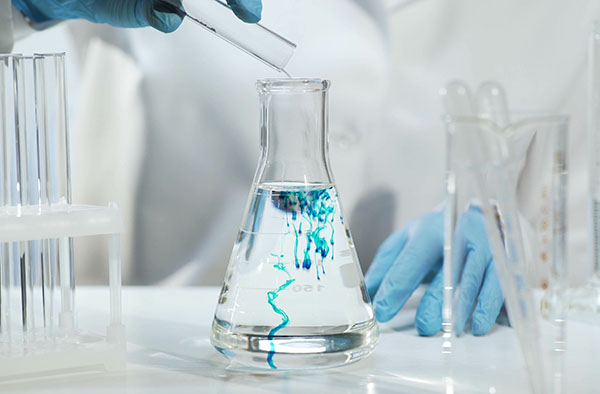
The materials used for Lupriflex safety shoes, as well as the finished products, are regularly tested by independent testing institutes for restricted substances and compliance with applicable requirements. A monitoring plan is in place for each production order to support consistent quality and compliance. Suppliers and sub-suppliers are selected based on defined quality and compliance criteria.

We are a member of [cads (cooperation for secured, defined standards in shoe and leather goods products)]. The aim of this industry initiative is to reduce and, where possible, prevent the use of substances of concern in footwear and leather goods. Its work is based on the “cads List of Restricted Substances in Shoes”, which includes requirements that go beyond the legal requirements of the European REACH Regulation in certain areas. Lupriflex complies with the applicable REACH requirements.

The membrane mainly used in Lupriflex safety footwear is certified according to [OEKO-TEX® STANDARD 100]. The certification confirms that the certified material has been tested for a range of harmful substances according to the applicable OEKO-TEX® criteria.

Environment

certified tanneries – recycled materials – CO2 emissions

The production of Lupriflex safety shoes in Europe is carried out in accordance with the applicable European environmental requirements. In Asia, we work with production partners that are certified according to ISO 14001, the international standard for environmental management systems.

Leather is an important material in footwear production. Its production involves the use of raw materials, energy and chemicals. Where possible, we therefore source leather primarily from tanneries certified by the Leather Working Group (LWG). The LWG certification provides a framework for assessing environmental practices in leather manufacturing.

Where technically possible, we increasingly use recycled materials in the development of new Lupriflex models. When selecting key components of our safety shoes – such as the upper material, sole and protective toe cap – we increasingly consider their associated CO₂ emissions.

At the same time, compliance with the applicable requirements of EN ISO 20345 remains a prerequisite for the development of our safety footwear.

Our climate targets

Scientifically based

We are committed to reducing our greenhouse gas emissions in line with climate science and to contributing to the goals of the Paris Agreement. To define and monitor our climate targets, we use the framework of the Science Based Targets initiative (SBTi).

Our near-term climate target is to reduce our Scope 1 and Scope 2 greenhouse gas emissions by 50% between 2018 and 2030. This target has been validated by the Science Based Targets initiative (SBTi). We have already achieved this reduction target.

Our climate targets – progress report

You can find our current SBTi progress report here: [Lupriflex SBTi Progress Report 2024]

At the same time, we are working to reduce greenhouse gas emissions across our upstream and downstream value chain (Scope 3). This includes emissions associated with raw materials and products, transport, business travel, employee commuting and other relevant activities along our value chain.

Our long-term goal is to achieve Net Zero by 2050 in line with the SBTi Net-Zero Standard. This means substantially reducing greenhouse gas emissions across our value chain and addressing residual emissions in accordance with the standard.

* Scope 1: direct greenhouse gas emissions from sources owned or controlled by the company, such as company vehicles and heating.
Scope 2: indirect emissions associated with purchased energy, such as electricity.
Scope 3: other indirect emissions occurring across the company’s value chain, such as purchased goods and services, transport, business travel, employee commuting and waste.

Priority goal: reducing emissions

As a family-owned company with a long tradition, we focus on measuring, avoiding and reducing greenhouse gas emissions wherever possible.

The basis for this is our annual CO₂ balance. It records relevant greenhouse gas emissions from activities such as heating, electricity consumption, business travel, employee commuting and paper consumption. The carbon footprint helps us identify emission sources and opportunities to reduce them over time.

Our annual carbon footprint shows that we have reduced our greenhouse gas emissions over time. Important measures include the use of electricity generated from hydropower and biogas produced from residues from sugar production at our company site.

For residual emissions, we have supported climate protection projects through carbon offsetting since 2008. We are currently assessing regional projects that we may support in the future.

Sea freight with biofuels

For deliveries from Asia, we use sea freight for which biofuels are used as an alternative to fossil fuels. Depending on the fuel and calculation method, biofuels made from waste and residues such as used cooking oil can result in significantly lower calculated greenhouse gas emissions than fossil fuels.

According to the calculation method used by our logistics provider, the use of biofuels for our sea freight can reduce the calculated greenhouse gas emissions by around 84% compared with the use of fossil fuels.

The actual reduction depends on the fuel used and the calculation methodology applied.

Social responsibility

working conditions and social standards

Working conditions and occupational health and safety are important aspects of responsible supply chain management. We are a member of amfori and participate in the amfori BSCI initiative to assess social standards in our supply chain and support improvements in working conditions.

We support the principles of the amfori BSCI Code of Conduct. These include freedom of association and collective bargaining, fair remuneration, occupational health and safety, protection of young workers, the prohibition of forced and child labour, non-discrimination, decent working hours, ethical business conduct, the prevention of precarious working conditions and environmental protection.

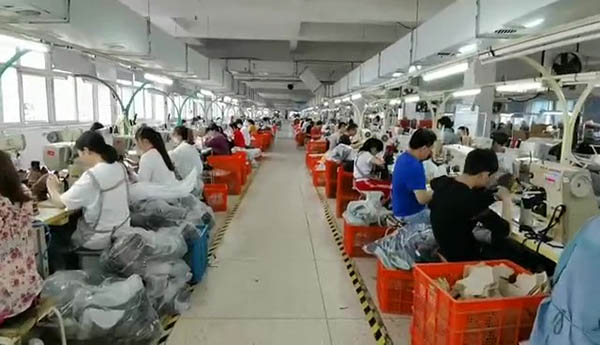
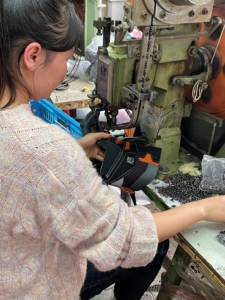
Our manufacturing partner’s factory in China is assessed through the amfori BSCI framework. The assessments are designed to identify areas for improvement in working conditions and social performance.

amfori BSCI provides companies with a framework for assessing and improving social standards in global supply chains. Its Code of Conduct sets out principles for responsible business conduct and working conditions.

We are a member of amfori and participate in amfori BSCI. For more information visit www.amfori.org

amfori BSCI Code of Conduct

amfori BSCI principles

amfori BSCI Glossary

Reference amfori BSCI

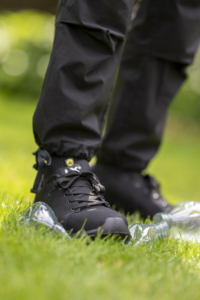
black safety boot on a green meadow

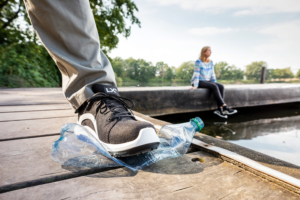
black/white safety shoe
black safety boot on a green meadow